We use cookies to offer you a better browsing experience, analyze site traffic and personalize content. By using this site, you agree to our use of cookies Privacy Policy

Cooler Box

What Are Coolers?

A cooler (also called a portable ice chest, ice box, cool box, chilly bin in New Zealand, or esky in Australia) is an insulated box used to keep food or drink cool.

Features of Our Coolers

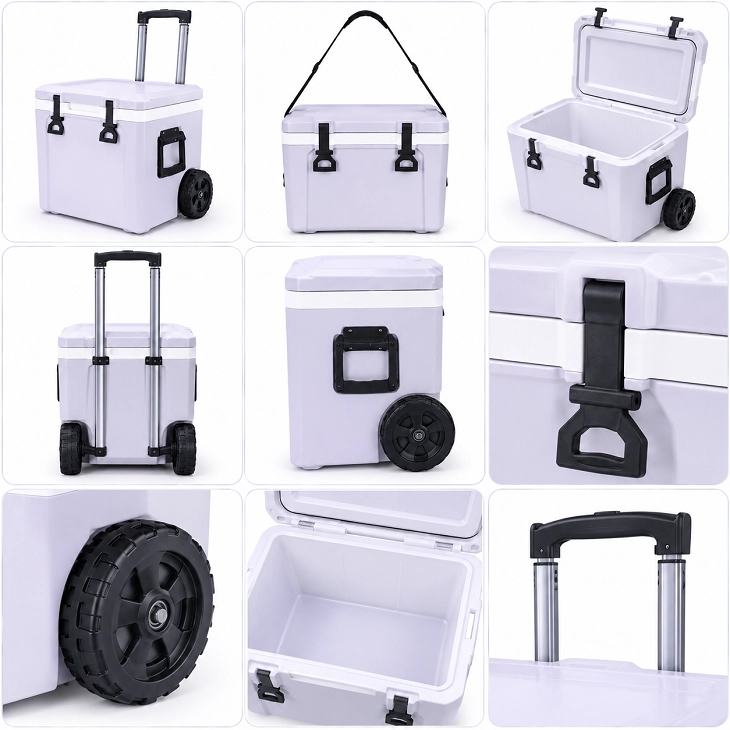
Robust & Portable

Made from ultra-strong EPS material, these coolers are well suited to the rigors of travel. High-performance insulation keeps contents chilled for long hours, and works best when you pack chilled food and drinks with ice cubes or freezer packs.

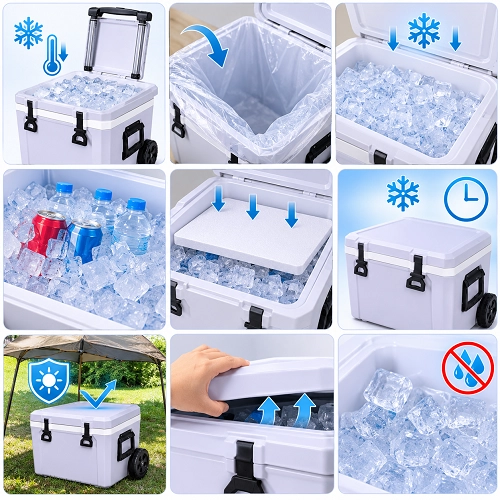
Stays Ice Cold

Thermal insulation keeps your contents chilled for up to 24–48 hours. The cooler can also keep contents warm for 6–8 hours. (Performance is enhanced with ice and cool packs.)

Choose from 5L to 80L

Ideal for camping, picnics, or carrying food and drink containers to work. This insulated cool box also performs better than a cooler bag, making it a good alternative.

Carry Handles

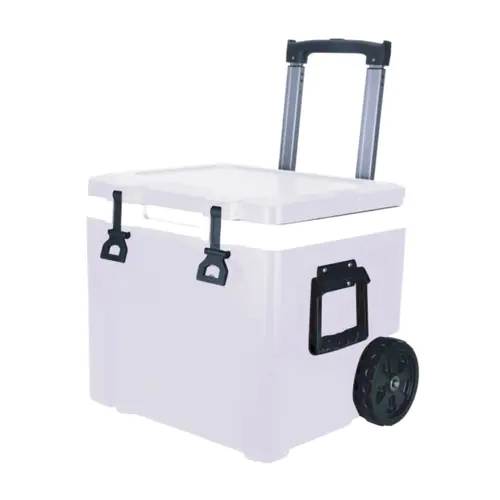
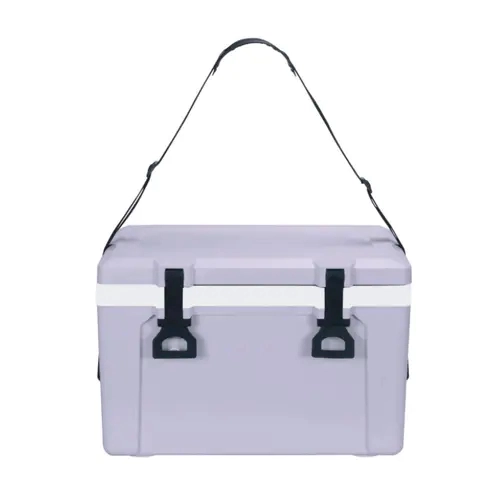
Side carry handles make the cooler box as easy on the body to move as possible. The fold-out handle makes it easy to transport.

Occasion

Ideal for camping, fishing, picnics, or your everyday work lunch. The cooler is also perfect for long road trips, days at the campsite, or sporting events.

Types of Coolers

01/

Hard-Sided Coolers

Plastic is a preferred material for top-quality hard-sided coolers, known for their strength and durability. Rotomolded coolers have earned a reputation as some of the finest ice chests available. Crafted from a single, seamless piece of plastic instead of assembled parts, they are also waterproof and leakproof.

02/

Soft-Sided Coolers

Fabric coolers are typically collapsible, making them easy to store when not in use. These lightweight, portable coolers are perfect for short outings such as picnics or beach trips. Soft-sided coolers can also offer extras such as wheels, telescoping handles, padded grips, exterior bungee cords, and mesh pockets for small items.

03/

Patio Coolers

For use in your backyard, consider a stationary or wheeled patio cooler. These are designed for convenience, with a raised design that makes it easy to reach food, ice, and drinks. They come in various decorative colors and styles, and some have locking casters to keep them in place. Buffet-style coolers add a built-in cooler area, one or two cabinets for glasses, napkins, and other essentials, and a countertop for mixing and serving drinks.

04/

Insulated Backpack Coolers

Some coolers have built-in drain plugs, while others must be turned upside down or on their side to empty. Certain models also have dry storage compartments, which offer convenient space for picnic essentials such as paper plates and utensils.

05/

Fishing and Camping Coolers

For camping, the best coolers offer the features you want and the storage capacity you need. If you want a wheeled cooler, choose one with oversized, heavy-duty rubber wheels that handle rough terrain easily. Also look for durable latches, hinges, and a lockable lid to keep wildlife, such as bears, out of your food. If you want an extra seat around the campfire, choose a hard-sided or rotomolded cooler that, according to the manufacturer, can support a person's weight.

06/

Travel Coolers

Before you set out, consider a travel cooler that works with your electronic devices. Some have weather-resistant compartments to protect your phones, laptops, and tablets, and some offer additional features. The best travel coolers for a plugged-in lifestyle not only keep your items chilled but also stream music from Bluetooth-enabled devices and even charge your phone.

Box

Applications of Portable Ice Box

For Road Trips

Keep your portable ice box in your car trunk or back seat to store snacks, drinks, sandwiches, salads, fruit, and more. You can also use it to keep restaurant or takeaway leftovers for later.

For Camping

Bring your portable ice box to the campsite to store meat, dairy, eggs, vegetables, and more. You can also use it to keep beverages cold or soup warm.

For Picnics

Pack your portable ice box with your picnic basket to store cheese, ham, bread, salads, desserts, and more. You can also use it to keep wine chilled or coffee hot.

For Parties

Place your portable ice box in your backyard or patio to store beer, soda, juice, water, and more. You can also use it to keep dips, sauces, salads, and other foods fresh and tasty.

For Sports

Carry your portable ice box to the sports field or gym to store water bottles, energy drinks, protein bars, and more. You can also use it to keep towels cool or heat packs warm.

What Are the Benefits of Using Coolers?

Maintains a Constant Temperature

A cooler box keeps all of your drinks, including beer, water, soft drinks, and other liquids, as well as food, chilled and fresh.

Even on a sweltering summer afternoon, these handy, easy-to-carry containers keep your food cool and insulated, and a wide variety of cooler boxes is available for sale.

01

Cooler Boxes Are Easily Portable

A cooler box is exceptionally portable. It is lightweight and doesn't take up much room, making it a convenient addition to any outing or holiday.

You can take it anywhere, anytime, whether you are camping, fishing, on vacation, driving, or going to the office. Cooler boxes are versatile enough to meet all of your needs.

02

Cooler Boxes Come in a Wide Range of Styles

Most cooler boxes are available in a broad variety of colors, patterns, and sizes, so you can find one that suits your personal style and matches your other travel items.

You can choose the size that best fits your requirements, which will vary from person to person. Colors range from muted, understated tones to bright, attention-grabbing shades.

03

Cooler Boxes Are Affordable

A cooler box is not a pricey item, so most people can afford one. Leading manufacturers sell them at even lower prices to capture a large share of the regional market.

As a result, you get greater value for your money when choosing among the cooler boxes for sale.

04

Cooler Boxes Will Last You a Long Time

A cooler box is resilient and has a long lifespan. Not only will it keep your food and drinks fresh for longer, it will also keep serving you reliably for years without losing its insulating strength.

05

How to Use Coolers?

Line the Inside of Your Ice Cooler with Aluminum Foil

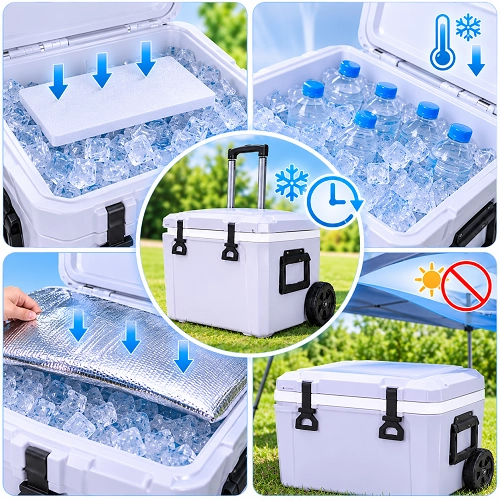
The most important way to keep your cooler cold is to keep the heat out. Lining the inside with aluminum foil helps reflect the heat and light that would quickly melt your ice. You can also use thermal bubble wrap to keep hot air out and cool air in. Another idea is to lay a reflective layer on top of the cooler to deflect additional UV rays.

Choose the Right Type of Cooler for Your Activity

Consider your activity before choosing a cooler. Soft nylon and polystyrene foam coolers provide a moderate amount of insulation and suit shorter day trips. For overnight camping or longer trips, invest in a more durable plastic cooler or another hard-sided cooler that stays cold much longer. Avoid metal coolers, as they absorb heat more easily.

Pre-Chill Your Cooler and Any Items You're Going to Store in It

One of the best ways to keep ice colder for longer is to chill the cooler before adding fresh ice. Add ice a couple of hours ahead, or even the day before, and let the cooler chill as much as possible. This prolongs the life of the fresh ice once you're ready to go. You can also freeze water bottles or non-carbonated drinks to act as extra cooling items that help preserve your ice. Make sure everything you plan to put in the cooler is well chilled in advance: instead of adding hot or room-temperature food and drinks, freeze or chill as much as possible beforehand.

Use Larger Ice Blocks Instead of Cubed Ice

Large ice blocks expose less surface area to the warmer outside air than small ice cubes, so they melt much more slowly. You can make your own ice blocks by using a clean, empty milk carton as a mold. Fill the carton with water (leave room for expansion) and freeze it. Once frozen, remove the carton and place the block in your cooler. Though bulky, ice blocks last much longer and work more effectively.

Wrap Your Cooler in a Wet Towel

Wrap the cooler in a light-colored wet towel and keep it in the shade. As wind passes over the towel, the water evaporates. As the water turns to vapor, it makes the towel colder, which keeps the cooler's temperature down and makes your ice last even longer.

Organize Your Cooler

Every time you open the lid, warm air enters and melts the ice faster. Put the items you need most often on one side to reduce the time the lid stays open. Instead of digging around for what you need, organize the cooler so that each opening is as efficient as possible.

Use Dry Ice as Well as Regular Ice

Dry ice, the solid form of carbon dioxide, is much colder than ordinary water ice (−109.3°F vs. 32°F). Place the dry ice at the bottom of the cooler and layer regular ice over the top. The dry ice helps cool the regular ice and turns to gas as it warms, leaving no mess or excess water to clean up.

Bury Your Cooler in the Ground

If you're camping for a few days, consider burying your cooler in the ground. As unconventional as this may sound, the cool soil helps maintain the temperature for longer. Just make sure to bury it only three-quarters of the way and choose a shady spot.

Empty Water from the Cooler as It Melts

Despite what you may think, keeping the melted water in the cooler is counterproductive. Water transfers heat through convection much more readily and encourages the ice to melt further. Removing the water as it accumulates makes your ice melt more slowly.

Tips for Keeping Ice Longer in Your Icebox

Make ice last longer
01. Prepare Your Icebox
Spread a layer of crushed ice around your icebox the day or night before you use it. Cooling the icebox and the air inside in advance does half the job for the ice you add later.
02. Use Block Ice
Crushed ice is full of air, so there isn't much solid ice. It melts quickly and leaves you with an icebox full of cold water. Block ice, on the other hand, is a solid mass. It keeps your icebox as cold as crushed ice but doesn't melt as quickly.
You can buy block ice in both soft and hard packs that are easy to handle and pack. Alternatively, make your own using ice cream containers or juice bottles, remembering to fill them only partway to allow for expansion.
03. Add Salt to Your Ice
Adding salt to the water before freezing lowers its freezing point, so your ice will actually be colder than frozen fresh water. Seawater works even better.
04. Cool Your Food and Drinks First
Your icebox performs best if you cool its contents first. Chill your food in a fridge for a few hours, then put the cold items into the icebox. This saves your ice from having to cool the contents down, so the ice lasts longer. If you don't have room in the fridge, put your drinks in the crushed ice you're using to cool the icebox.
05. Add the Beers!
When you add drinks to your icebox, leave the crushed ice in (as described above), even if it's already half-melted. The cold water helps slow the melting of your block ice.
06. Keep Out of the Sun
The sun is your worst enemy when it comes to preserving ice, for obvious reasons. Keep your icebox in the shade as much as possible, with good airflow around it. Putting the icebox inside your tent or car is like putting it in an oven, as temperatures can climb 10–20 degrees higher than outside.
You can even cover your icebox with a blanket or towel to shade it from the sun. At the beach, a wet towel works even better.
07. Avoid Opening Too Often
This is obvious, but every time you open your icebox you let heat in and cold out. Avoid opening it too often, and open it gently when you need to.
Here's a tip: rather than dashing to the main icebox every 10 minutes for another cold drink, move enough drinks to a smaller icebox or a soft-sided cooler bag to get you through a session. That way you only open the main icebox once (and you don't go thirsty!).
08. Fill Your Icebox as Much as Possible
An icebox packed to the brim preserves its ice longer than a part-filled icebox full of air. The more food and drinks you pack, the less air there is to cool down and keep cold.

What to Look for When Buying a Cooler?

webp_imageView2_2_w_ (1) webp_imageView2_2_w_ Cold box webp_imageView2_2_w_

Before you buy, think about how you intend to use your cooler. Will it mainly keep beverages cold in the backyard during a cookout, or will you haul it through the woods on a hunt? Also consider which features you want. Depending on the type you choose, it could be the last cooler you ever buy, so the right features are critical to your long-term satisfaction. Elements to look for include:

Country of Origin
Many people know that seemingly everything sold in the United States is made overseas, and coolers are no exception. Even some of the biggest names in the cooler industry have their products made in China and the Philippines.

Latching Mechanisms
Soft coolers usually have a zipper, while hard coolers tend to have some kind of latch. Unfortunately, the quality of latches can be severely lacking on some models. For instance, many big-box-store hard plastic coolers have cheap lid latches that break after a short time. Likewise, many high-end cooler companies offer rubber lid latches that wear out, deteriorate, and eventually break.

Material
The type of cooler and its material depend largely on how you will use it. For a daily lunch, a soft cooler made of nylon or vinyl should do just fine. For a semi-permanent fixture in your garage or backyard, consider a metal cooler. For hunting or camping, you will probably want a polyethylene rotomolded cooler. Let your intended use guide your choice of material.

Features
Depending on the expected lifespan of the cooler you buy, you may want one packed with great features. This is an area where GINT coolers shine: many come equipped with magnetic bottle openers, cup holders, tie-downs, fish rulers, rubberized feet, freezer-grade gaskets, sloped drains, wheels, organizational trays, dry storage compartments, and a host of other features that ensure your cooler never leaves you wanting or unprepared.

Ice Retention
This is what truly makes or breaks a cooler. After all, its sole purpose is to keep things cool. Naturally, hard coolers have better ice retention and insulation than soft coolers, and some companies' coolers retain ice better than others. Fortunately, whichever GINT cooler you choose, you are guaranteed to be in the upper echelon of ice retention.

Size
Again, the size you select depends largely on how you will use the cooler. That said, view sizes with a discerning eye, as the interior space of many coolers does not match their advertised capacity.

Warranty
Many top-of-the-line coolers come with sizable price tags, and for such an investment your cooler should last a lifetime. However, things happen, and mainly those things are bears. Rest easy knowing that many GINT coolers come with a lifetime warranty and are certified bear-resistant.


Other Things Coolers Can Do Besides Keep Drinks Cold

Use an Ice Chest to Store the Fish You Catch

Fish care is a concern in every season. When fishing in hot weather, keeping your catch cool is critical so the flesh doesn't deteriorate. On ice-fishing trips, when the mercury dips below freezing, the focus shifts to keeping the fish from turning into ice blocks.
Hard-sided insulated ice chests are great for storing your catch and keeping fish fresh, whether you're ice fishing in harsh conditions or out in the summer. The advanced insulation, together with the fish's residual body temperature, keeps them from freezing, so they stay pliable and ready to fillet when you come off the ice, and are easy to clean after a day out.
Keep food and beverages from freezing. A quality ice chest is also great for keeping food and drinks from freezing in the cold, hard-water environment of ice fishing. Tucked in the back corner of the shack or under a bench, things stay cold without freezing for the entire weekend.

Use Your Ice Chest to Keep Your Bait Alive Longer

With the rising cost of good live bait like shiners and rainbows, you need a viable way to keep your ice-fishing bait alive. A hard-sided cooler is a good solution. Gint Coolers insulate the temperature inside and keep it from getting any colder, much like the insulation in your house keeps out extreme cold. The bait doesn't freeze yet stays cold, so it burns less oxygen and stays alive and healthy longer. That means fewer trips to the tackle shop during the ice-fishing season.

Use a Cooler to Keep Food Hot

Coolers are known for keeping things cold, but they work just as well for keeping things warm. Think of the insulation in your house, which keeps the air cool in summer and warm in winter. An insulated ice chest works on the same thermodynamic principles. After all, one of the big reasons insulated hard-sided coolers are expensive is the insulation technology that goes into them, so why not use it for both hot and cold retention? That's added value for your money.

Use Your Ice Chest as a Weatherproof Storage Box

Coolers not only retain heat and cold but also keep water out, all within a virtually indestructible frame. For these reasons, your Gint ice chest makes an excellent dry storage container when it isn't in use as a traditional ice chest. You can use it to keep towels dry on a camping expedition, or as a substitute when you don't have enough compartments to store your items and don't want them scattered. Simply wash it with soap and water before using it again to cool your drinks or keep meals hot.

Custom Service

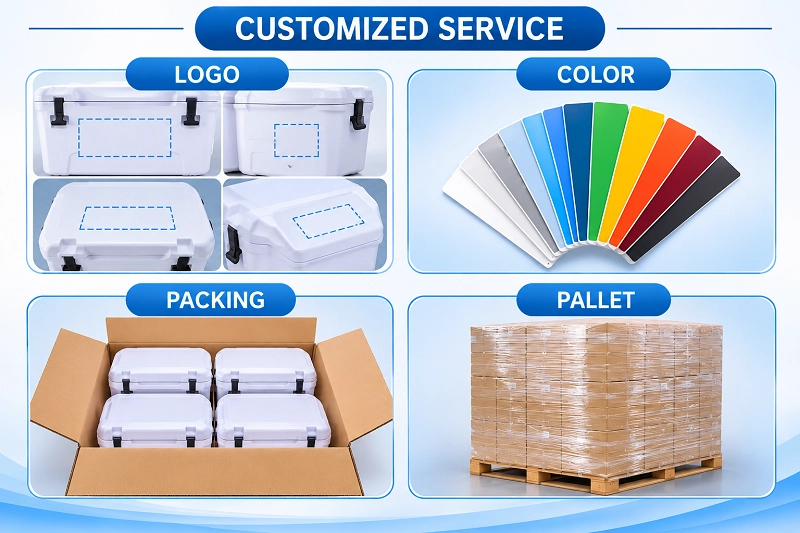
We offer custom services to design and produce customized products. Customers can choose the logo, color, and packing of their products to create something unique.

Logo
A logo is a graphic symbol that represents a business or a product. It helps customers identify and recognize a brand and conveys its values and personality. A customized logo makes a product more appealing and distinctive and reflects the customer's taste and style. Any Pantone color is available.

Color
Color is an important element of visual communication that can influence customers' emotions, perceptions, and preferences. It can also create associations with concepts such as nature, luxury, or fun. A customized color makes a product more attractive and expressive and matches the customer's mood and preference.

Packing
Packing is the material and design that covers and protects a product. It can also serve as a marketing tool that attracts attention, communicates information, and creates an impression. Customized packing makes a product more functional and convenient and enhances the customer's experience and satisfaction.

Package

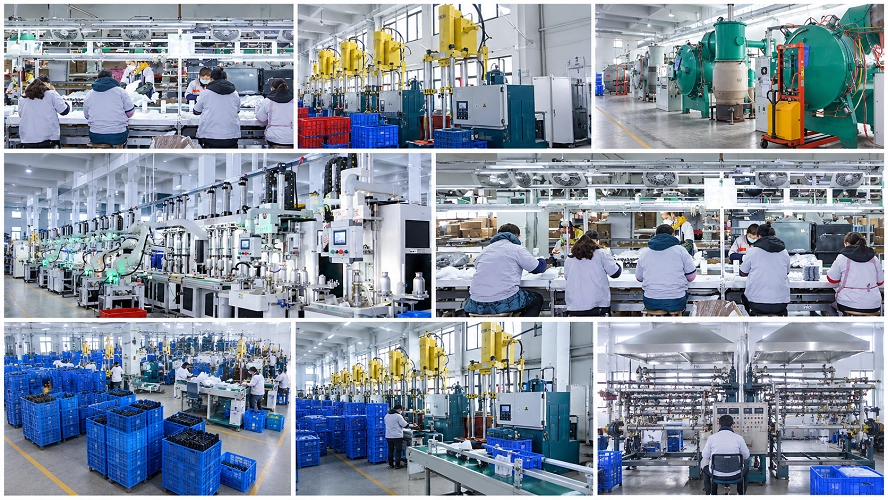
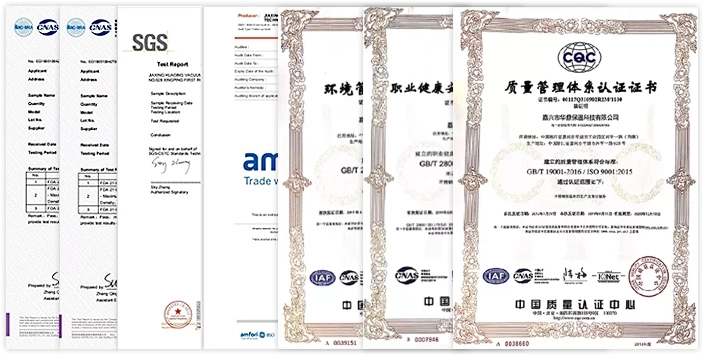
Our Factory and Certifications

factory
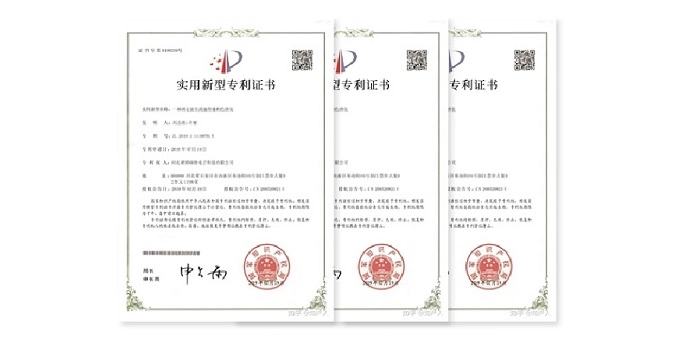
Patent Certification

FAQ

Q: What size cooler should I get for camping?

A: The right size depends on the number of people in your group and the length of your trip. For a weekend trip with two to three people, a 25–45 quart cooler is generally recommended. For families and longer stays, a capacity of 45–70 quarts is more suitable. You can also divide your items between two medium-sized coolers, which is often our preferred option.

Q: Is a cooler box worth it?

A: It's ideal for camping trips or festivals where you can't park very close to your tent. Its effective insulation can also keep food cold for days under the right conditions. We filled one with food, drinks, and a bag of ice, and everything was still chilled 36 hours later.

Q: How long does a cooler box stay cold?

A: If you follow our advice above, a cool box can stay effective for up to 24–48 hours. Larger versions tend to be the ones that provide two days of cooling.

Q: What is the advantage of a cooler box?

A: A cooler box keeps all of your drinks, including beer, water, soft drinks, and other liquids, as well as food, fully chilled and fresh.

Q: Is a cooler bag as good as a cooler box?

A: Generally, the solid sides and superior insulation make a cool box a better performer than a cooler bag. The cooler bag packs away more easily, whereas boxes are bulky and do not compress. The shape of a cool box can also make it harder to carry, which is why some models have wheels.

Q: Is it easy to clean coolers?

A: Cleanup is easy: just drain the water and air, wipe down the mat, and fold it up for storage or travel. Use it at home or take it along on adventures so your baby can discover the wonder of water and sensory play wherever you go. Clean it before use with a damp cloth and mild soap, then air dry.

Q: How long does food stay frozen in a cooler box?

A: Make sure there is enough ice to keep food in the cooler at 40°F (4.4°C) or below, and add more ice as it begins to melt. A full cooler holds its temperature for approximately 48 hours (24 hours if it is half full).

Q: What is the temperature of a cool box?

A: The ideal temperature in a cool box is the same as in a fridge, i.e. 2–6°C. A cool box stays at the ideal temperature if you cool it properly, keep it in a shady place, and monitor the temperature continuously with a wireless cool box thermometer. A cool box is a great way to keep food cool on every trip.